Book Review: Don't Tell Me How It Ends by Adrienne Thurman
Genre: Contemporary Romance
Pages: 320
Synopsis: After college, Kaia Harper has no plan for her life and no interest in love. Sworn off romance and convinced she already knows how every story ends, she’s content avoiding commitment altogether. But when her newly single, very pregnant sister pulls her back home and ropes her into a fledgling matchmaking business, Kaia becomes the last person she ever expected to be: a client.
As a summer of awkward dates and growing uncertainty unfolds, Kaia strikes up an unexpected friendship with Ro Jackson, whose steady presence challenges her carefully guarded outlook. What begins as support slowly turns into something deeper, forcing Kaia to confront whether protecting herself is worth missing out on the possibility of love.
Rating: 5 out of 5 stars
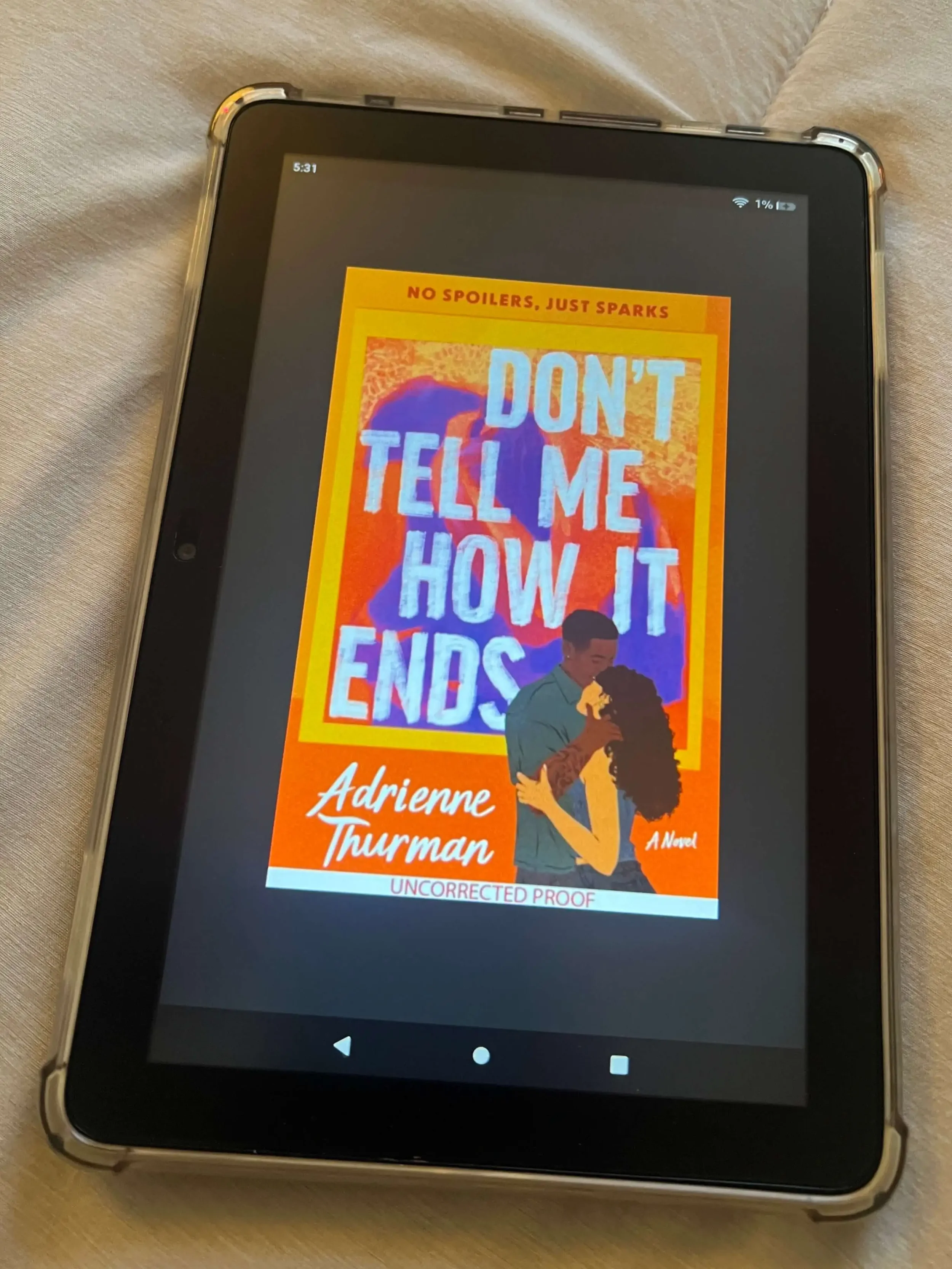
My Review:
Spoiler Alert!
This review contains spoilers for Don't Tell Me How It Ends. I received an advanced reader copy from Penguin Random House, but all thoughts and opinions are my own.
This book felt personal in a way I was not prepared for.
At the center of Don’t Tell Me How It Ends is Kaia, a recent college graduate trying to figure out who she is after the structure of school disappears. Adrienne Thurman does an incredible job capturing that post-graduate depression and anxiety. That feeling of starting the journey of adulthood with no clear map. Kaia choosing education as her major was also a heart tug once you learn about her relationship with her father (more on that later in this post).
One of the things I loved most was the family dynamic. Kaia, her sister Zola, and their mom are able to openly talk about how the father abandoning the family affected each of them differently. Those conversations felt honest and necessary. Nothing was brushed under the rug. Every character was given depth and space.
Ro Jackson deserves his own paragraph because he is, quite frankly, the man of my dreams. But what really made him stand out was that we also get to know his father. That generational context mattered. Ro was not just a love interest, he was a fully realized person shaped by his upbringing, his values, and his willingness to show up emotionally.
Zola’s storyline hit close to home for me. Her becoming a single mom unexpectedly is something many women can relate to, myself included. My marriage was ending when I found out I was pregnant, so I deeply understood her fear, her strength, and the way life can change all at once. That representation mattered.
Kaia’s fear of vulnerability, her overthinking, her hesitation around love and the future all mirrored parts of my own life. I’ve been single on purpose, but not on purpose, for eight years. So there were quite a few times I caught myself reading this novel with a mean side eye. While I reminded myself this was just a book, while also realizing that parts of it could very easily be my story.
What really stayed with me was Kaia’s support system. Her friend Liv, her mom, her sister Zola, and Ro were not afraid to call her out when needed. They acknowledged her fears but also pushed her to try, to open up, to risk failure. That kind of support, the kind that says “we see you and understand you, but you cannot stay stuck here,” felt powerful and real.
This book made me reflect on my own struggles with vulnerability, love, and uncertainty. It challenged my internal narratives about what it means to open up and what happens when you do. And that is what great storytelling does. It does not just entertain you. It sits with you.
Don’t Tell Me How It Ends is about love, yes, but it is also about becoming. About grief, family, fear, and the quiet courage it takes to move forward when you do not have all the answers yet.
I cannot recommend it enough.










Rise gave me more room to build out the experience, while 7Taps pushed me toward shorter, mobile-friendly pieces of content.